
Expectations Are the Thief of Joy
 I’m an Apple guy and just ordered their new MacBook Pro. It’s received stellar reviews and it’s time to update my laptop, so I placed my order.
One thing Apple gets better than any other of the hundreds of brands I interact with is that they know they’re not in the technology or computer business. They’re in the experience business. I’ve always said that about those of us in radio, too.
The laptop is backordered, and I was told it wouldn’t be delivered until December 23. Then Apple did what Apple does. They managed my expectations to bring me joy. Over the last couple of weeks, as I’ve checked on the status of the order, they’ve consistently moved the delivery date up. As I write this, it’s December 9. Where all other brands are having “supply chain issues” and delaying deliveries, Apple is heightening my anticipation as they always do so I stay joyful and gush about them as I’m doing to you.
Teasing is important in radio. But not for the reason most of us believe. It’s near impossible to extend listening as people have lives and those lives will always win out over them giving us another quarter hour. What great teasing does is set the expectation that listeners will miss something great if they tune out. So they get a sense they won’t be in on something special, so they come back to the show for more of that joy.
Often, I hear shows offer no teasing. That ain’t good. Many times, I hear something bland and unimaginative (“coming up next, our Hollywood Report” or “in six minutes, we’ll talk about when I took my dog to the park”). But when we tease intriguing, connective, relevant, entertaining content, being done in a way our competitors cannot, we bring joy to the break and set the audience to return for more of it the next day.
Worse still, I continue to hear stations and shows tell me that I need to do things like tune in Thursday at 7:20 for a “major announcement”. Only to find out that three days of hype led to the morning show telling me Maroon Five will play at the civic center in the spring and that we have family four packs/win ‘em before you can buy ‘em tickets starting on Monday. Yikes. Half the audience shrugged, the other half yawned, and all of them felt duped.
Expectations are the thief of joy indeed. The more you tease the same thing, the higher the expectation and greater chance of less joy.
Listen to your show. Ask if they are on the very best content available on every single day. Because it all starts with content and everything they do is considered content. Is it substantive and strategic? Does it align the program and cast with an image important to developing a relationship with the audience? Then, is it being done in a way that fits and both heightens expectations and delivers it to bring joy to the audience receiving it?
Our customers (listeners) want happiness. It’s in our control and epic if we bring it to them. But first we must set the right expectation and then deliver on it.
Oh wait, the MacBook Pro is now coming December 2…


 I talk with new shows about the “need for C’s”. A subjective metric to assess if your show is on course. These are the Four C’s every talent and show should work on, around the framework above, to assure they’re strategic. How would you rate your show in each of these areas?
 Years ago, one month out of the first anniversary of the Boston bombings, I decided to engage the two shows I work with in that city around what our programs will sound like that day. I received back, as is sometimes the case, silence. When I was on the air, I was the king of never planning. I usually worried about large milestone shows like this the day before. We don’t have that luxury any longer because of the competition for listeners’ attention.
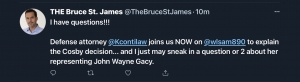 My friend Bruce St. James, who does mornings at WLS, Chicago, is incredibly smart (a good talent trait), but also quite curious (that’s what makes him smart!). I happened upon this tweet the day the Cosby story broke, which said it all. Bruce was also curious about how Cosby could be let out, so that fueled his breaks. And the audience naturally took the trip with him.
 There’s a show out west I don’t know but like as a listener. I’ve never met the people doing the program. As fate would have it, the anchor pinged me on Facebook wanting to set up a Zoom to say hello.
 Do your talent have EPIC in them? Are they high performers, always seeking that next level, welcoming the challenge for growth? Are they confident to not be the smartest, bestest, funniest, or most strategic in the room?
 Spend time as I have over these many years coaching and observing great talent and you’ll start seeing why they excel.