
How Wheel of Fortune Solved Instant Boredom Syndrome (You Can, Too!!)
 We all have a dreaded disease Big Pharma has yet to bombard our TV with ads. IBS is Instant Boredom Syndrome. We get bored quickly with everything.
The most critical part of a content break is its start. In its first few seconds, listeners are making conscious and unconscious decisions: is this topic interesting to me? Do I care about it? Is it entertaining? Yes, and they stay for a few. No and we lose them in some fashion. Each of us do, too, when consuming content. Which brings me to Wheel of Fortune.
It’s the most popular game on television whose ratings have not eroded over the years. This, in part, was due to the affable Pat and Vanna but also because of its design.
It’s highly familiar, which plays in its favor. It’s mind-candy, too (not very taxing after a long day at work). But over the years, it’s evolved. Because we have changed as viewers.
I talked about this in the blog I Learned How to Do Radio From Pat Sajak and Porn. In it, I note how Wheel re-designed the beginning of the game years ago to hook us more quickly because we all have IBS. Once the letters start appearing on Vanna’s board, that’s when we’re in as viewers.
Need proof? Here are two video clips. The first is an early Wheel when they started the program by showcasing the prizes to win (not the prizes I couldn’t win as a viewer, of course), then an intro of Pat and Vanna, then the worst part, the interview with the contestants. Watch this and see they don’t make this about us (we want the puzzles, the puzzles!!) until 3:01. I don’t care about any of this as a viewer. They’re giving me many reasons to depart. All of it delays my win, which is guessing the puzzle before the three contestants. Then watch the newer show after the redesign. The first letter in the first puzzle appears at :31.
Here’s Wheel of Fortune from yesteryear with a whole lot of This Doesn’t Matter to Me. IBS is killer. Take note of when your Instant Boredom Syndrome kicks in.
Now here’s Wheel of Fortune today, with a much faster start and hook for those of us watching.
Some radio shows continue to put listeners through process and promotional stuff at the beginning of breaks, delaying the actual content (whether a story or game or interview or other substantive content), eroding listeners’ interest and inviting them to stop paying attention.
Listeners come for content so let’s engage them there almost immediately, before their IBS kicks in. In your prep, spend the most amount of time figuring out how to engage the audience the quickest so what you do in your first twenty seconds makes them want to hear the twenty seconds after that.
When airchecking shows, I sometimes play “The 20 Second Game”. We listen to just the first twenty seconds of a content break and for one purpose. Is enough done to hold on to the listener for another twenty seconds? Don’t be version #1 of Wheel above. Be version #2. Your fans will renew their interest for more of that content and stick around.
Show these videos to your talent to help them get to it quickly so fans don’t mentally drift. We are given precious few seconds to grab the audience. Let’s not disrespect that lest their IBS appear and they move on to another available choice for connection, content, and entertainment.
 What happened to former President Trump at his Pennsylvania rally Saturday night applies. I believe great, relevant shows are about what’s happening right now. So, let’s touch on how to handle this charged topic:
 My phone tends to ring in only two scenarios: there’s a new show about to launch and it must be started strategically. Or the show is in the latter stages of its life cycle, and it needs to be re-invigorated. Let’s talk in this Planet Reynolds how to do the former.
 It’s not an easy job being on-the-air. Lots of spinning plates and the wearing of many hats. You can’t win today without having multiple skillsets. When you factor in the stress that comes with being in today’s version of radio, it falls upon each of us as leaders and managers to get the best out of our content creators – our talent who bring us brand value.
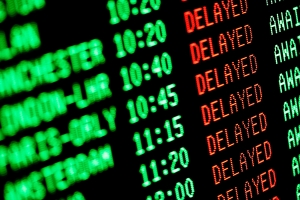 Early one morning last week, a radio friend texted that he’d just boarded a United flight in Traverse City, MI headed to New York through Chicago. He boasted that the flight would not be delayed because he was sitting in seat 27C and the Secretary of Transportation, Pete Buttigieg, was in seat 27E. I congratulated him on his good fortune.
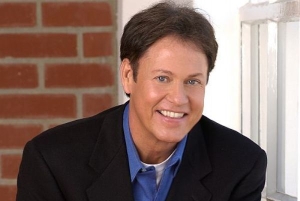 Years ago, when he was on in Los Angeles, I had a chance to work with the iconic Rick Dees. On a market visit and having lunch one day, Rick asked if I wanted to stop by his house. Rick and I had our weekly chats on Sundays at 4pm and he wanted to show me where he was when we talked about content.
 As Rick brought me through his upstairs, we cut through a bathroom that connected two bedrooms. Almost every drawer in that bathroom was partially opened. I noted this to Rick and that’s when he told me his wife never shuts the drawers completely and it drove him crazy. That’s when I shared with Rick that that was content. Radio was changing from bits to being real with lots of storytelling. And Rick sharing this tidbit about his relationship was quite relatable.
 You know what builds your brand and can’t be duplicated? Having interesting, engaging, electric people on your air. People like those we’ve seen at parties everyone is gathered around.
 I listen to some personality-driven shows in radio and hear not much more than Carl and Carol talking with one another, the show becoming all about them. With not much of a sense of how listeners are reacting to (getting bored by) the breaks where they’re just talking about stuff.
 Café Luna is a lovely Italian restaurant at the corner of Blount and Hargett Streets in downtown Raleigh, where I live. I went there so much I was a P1. Until that day I realized I hadn’t been in years. Let me explain why and what that means to you.
 Let me contrast this with a Tweet I saw in that same week. Another believer in radio was scanning the dial in their market and heard two shows do the same phone topic from a prep service on the same day.