
Kyle, Bryan, and Sarah, WRAL-FM, Raleigh Love Him or List Him
 Want to win big with women? Do lots of relationships content. A new signature feature for us on Kyle, Bryan, and Sarah, WRAL-FM, Raleigh is called Love Him or List Him. Purposely playing off the HGTV show Love It or List It, this one works great as America re-opens and listeners get back to dating. The simple thesis of this weekly feature is that a female listener comes on who’s had a date or two with a new person. The quirk is that she saw something or an odd thing happened which makes her wonder if she should continue seeing him (Love Him) or move on to the next person (List Him). This is simple story-telling with a hook that is relatable and intriguing to other female listeners. She comes on, lays out her challenge, and then you take calls, asking the audience what they would do in that instance. The big win is that those calling with opinions probably have lived through it so you’ll get a lot of first-hand advice and stories. Once you field a few calls, get that gal back on and tell her what the audience thinks she should do. Here’s a version with a twist!
 We all do well in radio using available audio of things that happen in the world. I’ve covered on this page the value of available audio to help make your break sparkle and give listeners some context in what you’re talking about. Dave and Mahoney, ALT 107.5, Las Vegas did something with audio that was so simple, yet so smart. There was a video circulating a few weeks ago of a woman who went crazy at a McDonalds. They got two other audio clips of people losing their shit at a fast food establishment. Theming it under the banner of Fast Food Freak Outs, Dave played the audio, then gave his team three options on what fast food restaurant it happened at. The brilliance of this move is that, as a listener, it drew me in, too. I wanted to hear the audio so I could guess from the fast food chains he offered at the end of each clip. There are passive breaks where the audience really has no role – you talk and they listen. Then there are active breaks where it’s designed to get into listeners’ heads and draws them in vicariously to participate.
 I’m regularly asked two questions: when do you know a story should be told on the air and how long should a break go. To the first, a story should be told if it has a central theme and lots of elements with twists and turns and unexpected moments that will keep me on the edge of my seat. When the story defines you, makes me feel something for you, and gets me to experience some kind of emotion is when you know you might have gold. How long should a break go? Well, that’s like porn – I know it when I hear (see) it. A great story with all the attributes listed above can take as much time as it needs to breath and be expressed and not a moment longer. Here’s Karson and Kennedy, MIX 104.1, Boston with a story about Karson’s really bad day-before. From his car breaking down on a major Boston street, to issues with the insurance company and tow truck, followed by no power in his house for several hours. Sometimes it all goes to shit and that was what Karson dealt with. Tell the story around the central theme and let the chemistry of the room take over for however long it needs.
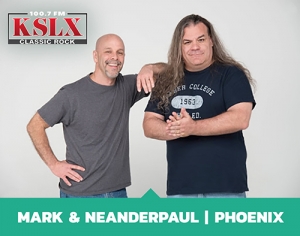 Two certain things that will resonate with any audience and make your break special: first, regardless of format, you must be on whatever relevant topics are happening on any given day. Contemporizing your show makes you be in the moment and any move you make away from being a generic, evergreen show is important. The other item is having destinations and surprises built into some of your breaks. Yes, conversation is critical in this day of “real talk”. But we still need to surprise the audience with payoffs which will make your break more fun and memorable. Enter Mark and NeaderPaul, KSLX, Phoenix, who execute this break perfectly. KSLX plays classic rock and targets a mostly older male audience. The rules don’t change there. During Pride Month, they still tackle former American Idol contestant David Archuleta’s coming out and then offer a surprise jingle at the end to remember all the letters of the alphabet when referencing that community.
 There is an immense value in all things nostalgia right now. The formats doing well are those that play older, well-known music. Brands with very high equity and are well-known have an advantage. We have a daily feature on David, Sue, and Kendra, MAGIC 106.7, Boston called the Throwback Live. I love this feature because it has many elements that could hook listeners: it has throwback audio clips from decades past that will be great nostalgia for listeners, it’s presented as a game that’s a friendly competition between two cast members so the audience can root for someone, and it’s vicarious so those in cars can play along as they travel to work. Research has proven many times that games resonate and are evaluated well by the audience. In large part because they’re easy to follow and are fun. That this has the added elements of throwback audio and the competition between two cast members, who’ll get defined in the process, are a bonus.
 What do you do when your church going 80-year mother, a Chicago Bears fan for life, detests Aaron Rodgers and he’s hosting Jeopardy that night? You charge up your phone to get commentary about what she thinks. So did John and Tammy, KSON, San Diego weeks ago as Jeopardy continued to offer up guest hosts with the death of Alex Trebek. Bring me there. That’s the message of this post. Make me feel like I am in the room with you. John knows his mother would be opinionated and fun with topic. So the show had options: recount the story themselves, get Bonnie on the phone after-the-fact, or record her in real time as she drips with emotion. It’s option “C” every time because that’s a higher level of drama for the audience to glum on to. That she’s older and works at a church is a wonderful setup. Remember…when in the middle of emotion, record it. These work parts will help you better tell the story and you will make the audience hearing it feel like they were there with you.
 Nostalgia is in and I bet you remember all those family meetings you had when you were a kid. Karson and Kennedy, MIX 104.1, Boston decided to air one. Karson’s young son, Barrett, recently called a family meeting at the dinner table to discuss a few things that were bothering him. This is awesome character development for Karson because we’re getting to know him as a dad. That’s the core of character development – am I getting to know something about you that makes you relatable to me? What’s fun about this is the interaction between Barrett and his parents. Also listen for its execution. Karson didn’t just record the table conversation and air it in its entirety. He edited it and they talked around parts of it so the team could keep their in-studio chemistry and commentary at the forefront. Great radio is doing relatable content in a unique way that allows for natural humor and humaneness. This ticks those boxes.
 One filter in your prep process should be – is there audio we can play in this break that will help make it sparkle? There was a time (in the olden days!) when the only audio available came from the prep services you subscribed to. But with the internet, audio is everywhere. Breaks with the cast just talking about a TV show they watched are not as good as breaks that have audio from that TV show. This is for a few reasons: first, the audio provides much needed context for those who didn’t see the show (most of your listeners) so they understand better your comments. Second, listeners need “audio stimulation” so they don’t drift and audio inside a break provides that, helping keep their interest. So always look for audio for any topic you do. Here’s a simple, yet effective character break from Christine and Salt, WTIC-FM, Hartford. Christine got a letter from her son’s school and wondered if it was real. A local TV station confirmed it. Their use of that audio did the two critical things above, which made the break better perceptually.